Beyond the Velvet Rope: What “False Idol” Teaches Us About Celebrity Worship
In an age dominated by 24/7 social media updates, viral trends, and parasocial relationships, the line between admiration and adoration has become increasingly blurred. We find ourselves projecting our deepest hopes, desires, and ideals onto figures who exist largely as polished screen projections.
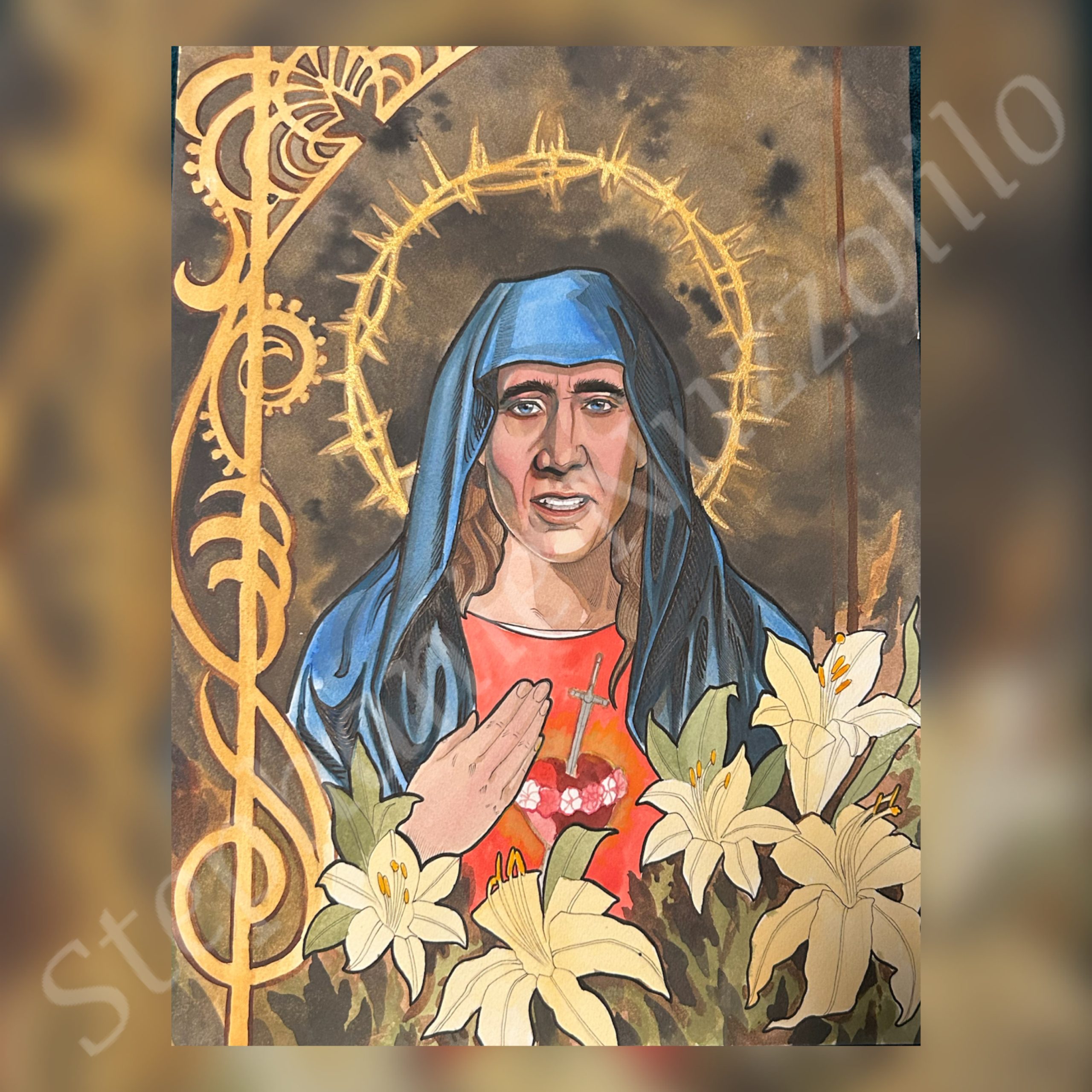
Artist Stephanie Nuzzolilo captures this modern cultural phenomenon with striking visual irony in her artwork, “False Idol”.
Deconstructing “False Idol”
At first glance, False Idol mimics the aesthetic of traditional sacred art—specifically classic depictions of religious iconography, such as the Virgin Mary or sacred heart portraiture. It features familiar symbols:
- The Sacred Heart and Lilies: Symbols traditionally associated with divine purity, devotion, and sacrificial love.
- The Golden Halo and Crown of Thorns: Stylized elements radiating behind the figure’s head, evoking sacred reverence and martyrdom.
- Intricate Art Nouveau Borderwork: Elegant gold embellishments framing the composition to elevate the subject to revered status.
However, the central figure is unmistakably modern pop-culture icon Nicolas Cage.
By juxtaposing holy iconographic motifs with the face of a Hollywood actor—a figure widely celebrated across internet meme culture and cinema alike—Nuzzolilo creates a powerful critique of modern obsession. The artwork forces a sharp contrast between sacred devotion and secular obsession.
The Culture of Celebrity Worship
Why do we elevate celebrities to near-mythical statuses?
In contemporary society, public figures often become avatars for our personal goals, emotional needs, and aesthetic aspirations. We track their daily lives through screens, defend them in comment sections, and curate entire online personas around their public image.
This phenomenon, often referred to as celebrity worship culture, fills a natural human desire for connection and meaning. However, when taken to extremes, it creates a one-sided (parasocial) relationship with figures who do not know us and cannot reciprocate our devotion.
By framing Nicolas Cage as a sacred figure, False Idol gently pokes fun at this cultural urge while exposing a deeper truth: we are quick to build altars to things that cannot love us back.
Reclaiming Your Energy: Putting Focus Where It Belongs
The core message behind False Idol serves as a reflective reminder to check where our daily energy, attention, and passion actually go. Attention is one of our most valuable, finite resources. When we pour an overabundance of energy into idolizing famous strangers, we risk depleting the energy we need for our own lives.
Here are a few ways to redirect that focus back into what truly matters:
- Invest in Real-World Connections: Prioritize the friends, family, and community members who actively shape your day-to-day life and support your well-being.
- Cultivate Your Own Creative Outlets: Instead of remaining a passive spectator of someone else’s art, career, or lifestyle, channel that inspiration into your own craft, hobbies, or passion projects.
- Practice Mindful Consumption: Be conscious of the media you consume and how much mental real estate celebrity culture occupies in your daily routine.
- Anchor Your Values Inwardly: Base your sense of identity and purpose on your personal values, growth, and achievements rather than external figures.
Stephanie Nuzzolilo’s False Idol is both humorously provocative and deeply reflective. It invites us to appreciate art, entertainment, and pop culture without losing our sense of grounded perspective.
Celebrities can entertain us, inspire us, and make us laugh—but they shouldn’t become the focal point of our devotion. By recognizing “false idols” for what they are, we free up our energy to build meaningful lives, foster authentic connections, and create art of our own.
No responses yet